

Many healthcare professionals strive to advance their careers but face challenges when navigating specialized nursing paths. The surgical intensive care nurse role demands a rare blend of advanced clinical skills, emotional resilience, and precise technical knowledge. Competing for these coveted positions often hinges on demonstrating specialized expertise and aligning career goals with critical-care expectations.
With years of experience in healthcare career development and strategic medical resume writing, experts recognize the complexity of surgical intensive care nursing. This comprehensive guide is designed for nurses, allied health practitioners, and clinical professionals aiming to excel in surgical critical care. It explores key job responsibilities, essential qualifications, growth opportunities, and recommended resume strategies for a surgical intensive care nurse in 2026.
Understanding the Role of a Surgical Intensive Care Nurse
A surgical intensive care nurse—commonly known as an SICU nurse—provides round-the-clock monitoring and care for patients recovering from complex surgeries or life-threatening conditions. These nurses work in the surgical intensive care unit (SICU), a department designed for patients requiring advanced monitoring, life support, and post-operative interventions. Their work ensures that surgical patients remain stable during the most vulnerable stages of recovery.
The responsibilities of a surgical intensive care nurse extend beyond general patient care. They analyze vital signs, administer critical medications, operate specialized equipment such as ventilators and invasive monitoring systems, and respond swiftly to emergencies. Collaboration with physicians, anesthesiologists, and respiratory therapists forms the foundation of their daily workflow, ensuring cohesive recovery strategies for each patient.
Like all critical-care specialists, SICU nurses must possess scientific acumen and emotional composure. Their decisions often influence patient survival rates, making clinical judgment, rapid assessment, and problem-solving indispensable skills. Observation accuracy directly informs physician interventions, particularly after high-risk surgeries such as open-heart procedures, neurosurgery, or organ transplants.
Across hospitals in the United States, surgical intensive care nursing is regarded as both technically demanding and deeply rewarding. Professionals in this area contribute significantly to post-surgical mortality reduction and improved outcomes—an increasingly vital metric as healthcare systems emphasize patient safety and precision-based medicine.
Core Responsibilities and Daily Duties
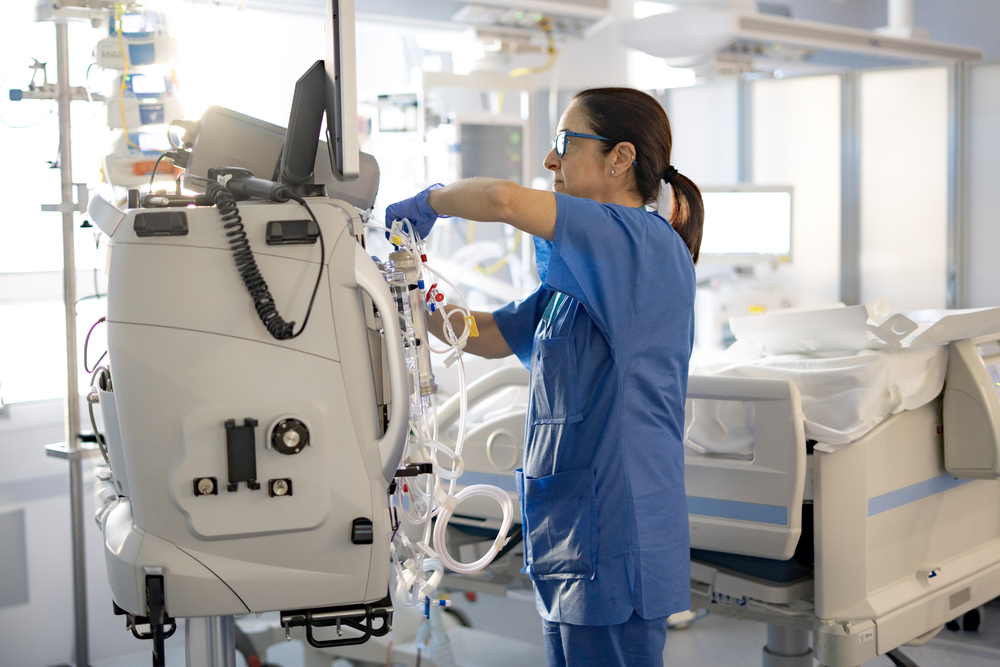
The core duties of a surgical intensive care nurse revolve around stabilizing critical patients recovering from major surgical procedures. Their role encompasses clinical proficiency, interprofessional collaboration, and patient advocacy, forming the backbone of critical post-operative care in hospitals and surgical centers.
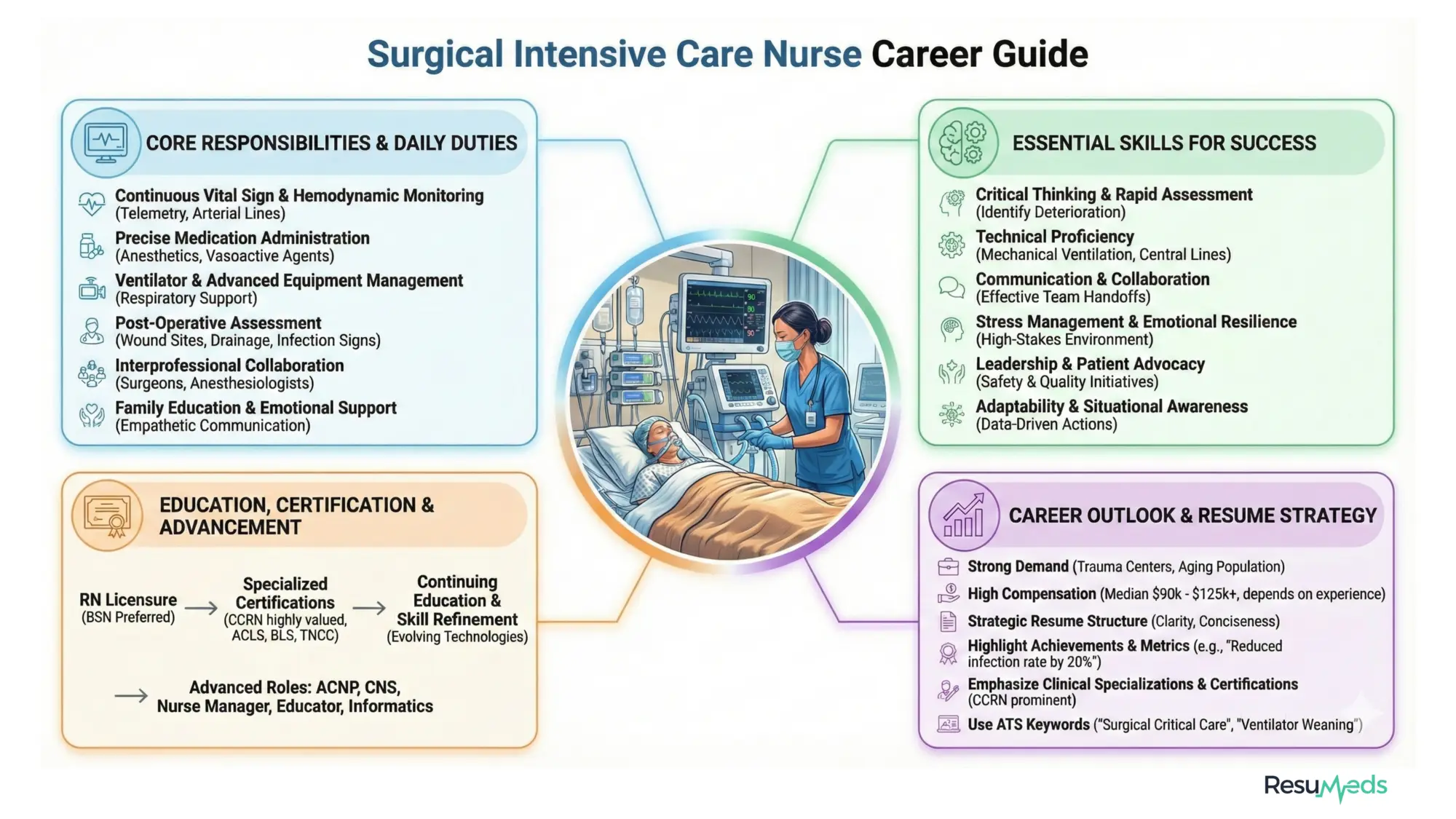
- Continuous Patient Monitoring: Surgical intensive care nurses track vital signs using telemetry, arterial lines, and intracranial pressure monitors. Early recognition of abnormalities allows for immediate responses that can prevent complications.
- Medication Administration: These nurses administer anesthetics, analgesics, and vasoactive medications, adhering strictly to dosages to maintain patient stability. Precision is crucial, as many agents act rapidly within seconds.
- Ventilator and Equipment Management: Mastery of ventilators and infusion pumps plays a central role in patient support, especially for individuals with compromised respiratory function following thoracic or neurological operations.
- Post-Operative Assessment: Surgical intensive care nurses evaluate wound sites, drainage systems, and fluid balance to detect early signs of infection, hemorrhage, or shock.
- Collaboration with Surgical Teams: Communication with surgeons, anesthesiologists, and specialists ensures continuity in treatment, particularly during multidisciplinary rounds.
- Family Education and Support: Beyond medical care, SICU nurses communicate updates sensitively, guiding families through complex recovery processes with empathy and clinical clarity.
The SICU nursing environment thrives on synchronization and responsiveness. Every action is data-driven, and each minute may influence patient outcomes. As such, nurses in this environment require constant situational awareness, adaptability, and a high tolerance for pressure. This professionalism supports the broader healthcare objective—optimizing surgical recovery rates and patient quality of life.
Education and Certification Requirements
Becoming a surgical intensive care nurse begins with foundational nursing education followed by specialized critical-care training. A Registered Nurse (RN) license obtained through completion of an accredited nursing program—usually an Associate Degree in Nursing (ADN) or a Bachelor of Science in Nursing (BSN)—is required prior to licensure. However, most healthcare institutions in 2025 prefer or require BSN qualifications due to the depth of theoretical preparation and clinical competency these programs provide.
After obtaining RN licensure by passing the National Council Licensure Examination (NCLEX-RN), aspiring SICU nurses pursue additional certifications to demonstrate proficiency in acute care. The Critical Care Registered Nurse (CCRN) credential offered by the American Association of Critical-Care Nurses (AACN) remains one of the most recognized certifications for ICU professionals. Other beneficial certifications include Advanced Cardiovascular Life Support (ACLS), Basic Life Support (BLS), and Trauma Nursing Core Course (TNCC).
Hospitals increasingly seek candidates who combine academic excellence, critical thinking, and readiness for evidence-based practice. Continuous education ensures surgical intensive care nurses remain aligned with evolving medical technologies and clinical methodologies—ranging from electronic charting systems to advanced surgical robotics integration.
Essential Skills for Success in Surgical Intensive Care
Technical mastery alone does not define excellence in surgical intensive care nursing. The most successful professionals integrate clinical accuracy with emotional intelligence and leadership capability, ensuring optimal outcomes for both patients and teams. Surgical intensive care nurses must cultivate a balanced portfolio of hard and soft skills to thrive in fast-paced hospital environments.
- Critical Thinking and Assessment: Rapid assessment of patient symptoms and trends supports timely interventions, often preventing deterioration.
- Technical Proficiency: Familiarity with mechanical ventilation, central lines, and post-anesthesia protocols underpins effective care delivery in complex surgical recovery.
- Communication and Collaboration: Surgical intensive care nurses facilitate communication between surgical, anesthesia, and respiratory teams, ensuring continuity of care and efficient decision-making.
- Stress Management and Emotional Resilience: The SICU environment frequently involves high stakes and emotionally charged cases, requiring psychological endurance and composure.
- Leadership and Advocacy: As patient advocates, nurses in this field promote safety, ethical compliance, and quality improvement initiatives within intensive care units.
Proactive leadership distinguishes surgical intensive care nurses in multidisciplinary contexts. Those who anticipate complications, mentor less experienced colleagues, and contribute to clinical audits often advance into management or educator roles. Cultivating reflective practice and emotional awareness empowers nurses to maintain longevity and satisfaction in this demanding but purposeful career path.
Career Outlook and Opportunities in 2026
As of 2025, the demand for surgical intensive care nurses remains exceptionally strong across U.S. hospitals, especially those operating Level I and II trauma centers. According to the U.S. Bureau of Labor Statistics (BLS), registered nursing employment is projected to grow steadily through the next decade, with critical-care specialists ranking among the most sought-after due to rising surgical complexity and an aging population requiring intensive post-operative support.
Compensation levels reflect the high skill threshold required. PayScale and Indeed data show that the median annual wage for an SICU nurse in the United States typically ranges between $90,000 and $125,000 depending on region, shift differentials, and experience level. Nurses with CCRN certification and extensive trauma or neuro-intensive experience often earn premium wages compared to those in general adult or medical-surgical units.
The career path for surgical intensive care nurses frequently expands into advanced practice or leadership positions. Many pursue roles as clinical nurse specialists, nurse practitioners specializing in acute care, or nurse managers overseeing intensive care operations. Continuous research involvement and participation in quality improvement committees also position SICU nurses as valued contributors to healthcare innovation.
Crafting a Strong Resume for Surgical Intensive Care Nurses
Success in applying for competitive SICU positions often relies on strategic resume structure. Hiring managers prioritize clarity, conciseness, and evidence-based achievements. A strong resume not only lists credentials but also emphasizes clinical outcomes and measurable successes achieved in high-pressure medical settings.
- Professional Summary: Begin with a 3–4 sentence overview that reflects years of experience, clinical specializations, and a commitment to patient-centered care in surgical and critical-care environments.
- Key Skills Section: Include procedural expertise such as ventilator management, hemodynamic monitoring, sedation titration, and post-operative stabilization.
- Achievements and Metrics: Quantify accomplishments—such as “Reduced post-operative infection rate by 20% through evidence-based wound management” or “Trained five new SICU nurses, improving department competency scores.”
- Certifications: Position credentials like CCRN and ACLS prominently to immediately convey readiness for critical-care environments.
- Keywords for ATS Compliance: Incorporate job-specific terminology—“surgical critical care,” “ventilator weaning,” and “multidisciplinary rounds”—to ensure compatibility with hospital applicant tracking systems (ATS).
Formatting consistency communicates professionalism. Employers evaluate resumes within seconds; therefore, nurses should maintain clean layouts, defined headings, and bullet points centering on tangible results. Several professionals secure interviews by combining data-driven metrics with compassionate descriptors demonstrating both technical mastery and human-centered intent.
Advancement Pathways and Continuing Education Options
Surgical intensive care nursing opens avenues for long-term professional progression. Nurses seeking to move beyond bedside roles frequently pursue graduate education programs in nursing leadership, education, or advanced clinical practice. For example, a Master of Science in Nursing (MSN) specializing in Acute Care Nurse Practitioner (ACNP) or Clinical Nurse Specialist (CNS) education can elevate responsibilities and salary potential.
Continuing professional development amplifies credibility and ensures compliance with hospital standards and national care frameworks. Many employers fund continuing education units (CEUs) focusing on advanced ventilation management, extracorporeal circulation, and surgical recovery analytics. Participation in AACN conferences and membership in professional organizations fosters networking and continuous learning essential in 2025’s rapidly evolving medical landscape.
Technology integration also reshapes surgical intensive care. Specialized certifications in clinical informatics, tele-ICU practice, or quality improvement allow nurses to transition into hybrid roles bridging bedside care with data-driven decision-making. This blend of human empathy and technological literacy defines the future of modern intensive care nursing in the United States.
Empowering the Next Generation of Surgical Intensive Care Nurses
Excellence in surgical intensive care nursing is built upon lifelong learning, mentorship, and advocacy for patient safety. Aspiring nurses who embrace continuous skill refinement and seek evidence-based clinical practices position themselves for sustained success. As surgical technologies advance, so too does the need for adaptable professionals who combine compassion with precision.
A powerful resume can determine how healthcare professionals stand out in a competitive job market. By highlighting clinical expertise, certifications, and measurable outcomes, candidates can open doors to new opportunities. Many achieve this with nurse resume writing services that ensure ATS compliance and tailored storytelling for the medical field.
Frequently Asked Questions
What does a surgical intensive care nurse do daily?
Surgical intensive care nurses monitor critically ill patients recovering from major operations, manage life-support equipment, administer complex medication regimens, assess post-surgical complications, and collaborate with multidisciplinary teams to ensure safe recovery.
What qualifications are needed to become a surgical intensive care nurse?
Candidates must hold an active RN license and typically a BSN degree. Additional certifications such as CCRN, ACLS, and TNCC strengthen credentials and validate expertise in critical-care environments.
How much do surgical intensive care nurses earn in the United States?
As of 2025, surgical intensive care nurses earn between $90,000 and $125,000 annually, depending on experience, credentials, and region, with higher wages in metropolitan and trauma-center settings.
What are the main challenges faced by SICU nurses?
The primary challenges include high patient acuity, emotional fatigue, and time-sensitive decision-making. Effective coping mechanisms, team collaboration, and resilience training are crucial for professional sustainability.
What are the career advancement options for SICU nurses?
Many surgical intensive care nurses progress into advanced practice roles such as acute care nurse practitioners or clinical nurse specialists. Leadership or educator paths are also common, supported by continued graduate education.