

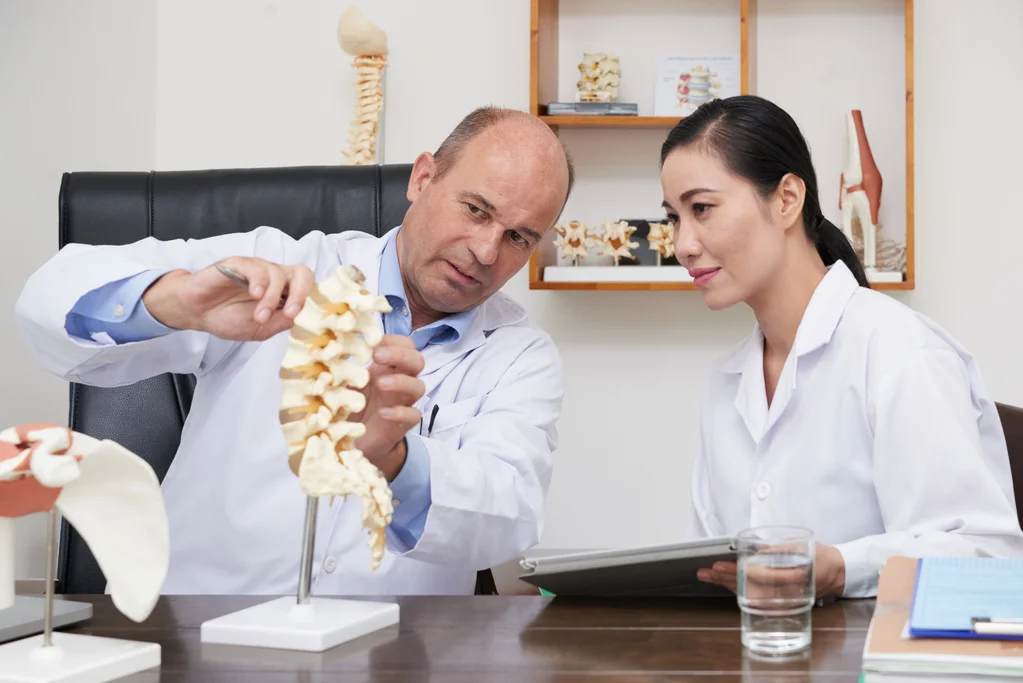
Chiropractors do more than crack backs. They assess the spine, identify movement problems, and use hands-on techniques to help patients feel better and move more freely. It takes a specific mix of knowledge, physical ability, and people skills to do this work well.
Understanding the skills chiropractors need matters because it shapes the quality of care he or she provides. A chiropractor who is strong in both clinical and communication skills can make a real difference in one’s recovery. One who lacks certain abilities may miss something important.
In this article, you will learn the most important skills needed to become a chiropractor, how clinical skills in chiropractic care work in practice, and what chiropractor patient care skills look like day to day.
What Are the Core Clinical Skills in Chiropractic Care?
Clinical skills are the technical abilities chiropractors use to assess and treat patients. These are learned in school and sharpened over years of practice. In healthcare broadly, clinical and soft skills work together to support strong patient outcomes, and chiropractic is no different.
- Spinal assessment and palpation are the foundation. Chiropractors use their hands to feel the spine and identify areas of tension, restricted movement, or misalignment. This skill requires sensitivity in the fingertips and a strong understanding of anatomy. According to the American Chiropractic Association, proper spinal assessment is central to every treatment plan.
- Spinal manipulation, often called an adjustment, is what most people picture when they think of chiropractic care. It involves applying controlled force to specific joints. Getting the angle, speed, and pressure right requires years of deliberate practice. Poor technique can cause discomfort or, in rare cases, injury.
- Range-of-motion testing helps chiropractors assess how well the spine and joints move. They compare findings to established benchmarks and use this data to track a patient’s improvement over time.
- X-ray and imaging interpretation are also part of clinical training. Many chiropractors review X-rays to look for structural problems, fractures, or signs of disease that determine the most appropriate course of treatment.
What Patient Care Skills Does a Good Chiropractor Need?
Chiropractor patient care skills go beyond technique. A patient who does not feel heard or understood is less likely to follow through with treatment, which slows recovery.
- Active listening is one of the most underrated skills in healthcare. Patients often come in with a mix of pain, frustration, and confusion. A chiropractor who listens carefully picks up on details that might not show up on an exam. For example, a patient who mentions the pain is worst on Monday mornings might be revealing a workplace ergonomics issue that is driving their condition.
- Clear communication matters because patients need to understand their diagnosis and what the treatment involves. Using plain language instead of medical jargon makes this easier. This is especially important when explaining what an adjustment will feel and sound like, so patients are not alarmed. The way healthcare professionals communicate directly affects patient trust and treatment adherence, which is just as true in a chiropractic office as anywhere else.
- Building trust takes consistency. Showing up on time, following through on what you say, and remembering small details about a patient all add up. Research published in the Journal of Manipulative and Physiological Therapeutics has shown that the therapeutic relationship between a chiropractor and patient affects treatment outcomes.
What Skills Are Needed to Become a Chiropractor?
The skills needed to become a chiropractor include academic knowledge, physical coordination, and professional behavior. If you are considering chiropractic as a career path, knowing how to present these skills on a healthcare resume is just as important as developing them.
- A strong foundation in biology and anatomy is essential from day one. Doctor of Chiropractic programs, which take four years after a bachelor’s degree, are intense. The Council on Chiropractic Education sets the academic standards for accredited programs in the United States.
- Critical thinking and diagnostic reasoning help chiropractors decide what is causing a patient’s pain and whether chiropractic care is the right fit or if a referral is needed. Not every problem is a chiropractic problem, and recognizing that is a key part of being a safe practitioner.
- Fine motor skills and physical stamina matter because adjustments involve precise hand movements performed dozens of times a day. Chiropractors also spend much of their day standing, bending, and applying controlled pressure. Physical conditioning is important for their own health as well as their patients’.
- Professionalism and ethics are non-negotiable. Chiropractors work with people in pain who are often vulnerable. The American Chiropractic Association publishes a code of ethics that guides chiropractors’ behavior toward patients, colleagues, and the public. These traits align closely with the detail-oriented and professional qualities that all healthcare employers look for.
How Do Chiropractors Approach Diagnosis?
Good diagnostic skills separate a chiropractor who gets results from one who guesses. The process usually starts with a full health history interview, followed by a physical exam.
The physical exam includes posture analysis, reflex testing, muscle testing, and orthopedic testing. These help pinpoint the problem and rule out causes that may require medical care. Strong skills for a doctor resume, such as diagnostic accuracy and patient management, are equally relevant for chiropractors, since both roles depend on the ability to translate a patient’s symptoms into a clear care plan.
Chiropractors also need to know when to stop. If a patient’s condition is worsening or not responding to care after a reasonable number of sessions, referring them to a physician or specialist is the right call. This takes both clinical knowledge and professional humility.
Why Continuing Education Matters
Chiropractic science continues to evolve. New research on spinal biomechanics, pain science, and rehabilitation comes out regularly. Chiropractors in the United States are required to complete continuing education hours to maintain their license, but the best ones go beyond the minimum.
Staying current with evidence-based practice keeps a chiropractor’s skills sharp and helps patients get better outcomes. Setting clear professional growth goals is one practical way chiropractors and other healthcare professionals stay on track with ongoing development. The Foundation for Chiropractic Progress is one resource that tracks research and communicates it to both practitioners and the public.
The Balance Between Skill and Judgment
A chiropractor’s value is not in technique alone. The most skilled adjusters still need good judgment about when to act and when to hold back. Knowing which patients are safe candidates for spinal manipulation, which need modified techniques due to age or health conditions, and which need a different kind of care entirely is what sets strong practitioners apart.
This balance of technical skill and careful thinking is what makes chiropractic care effective for the millions of Americans who seek it each year. For chiropractors looking to communicate these strengths to employers or future patients, learning how to highlight core competencies clearly is a worthwhile step in building a credible professional presence.
Advancing Your Chiropractic Career with a Strong Resume
Advancing your career in chiropractic goes beyond mastering clinical skills—it also means presenting your qualifications in the best possible light. A well-crafted resume can make all the difference in landing the right opportunities and standing out in a competitive field. If you want to strengthen your application and highlight your expertise effectively, consider exploring ResuMeds’ professional healthcare resume writing services. With the right support, you can take the next confident step toward achieving your career goals!