

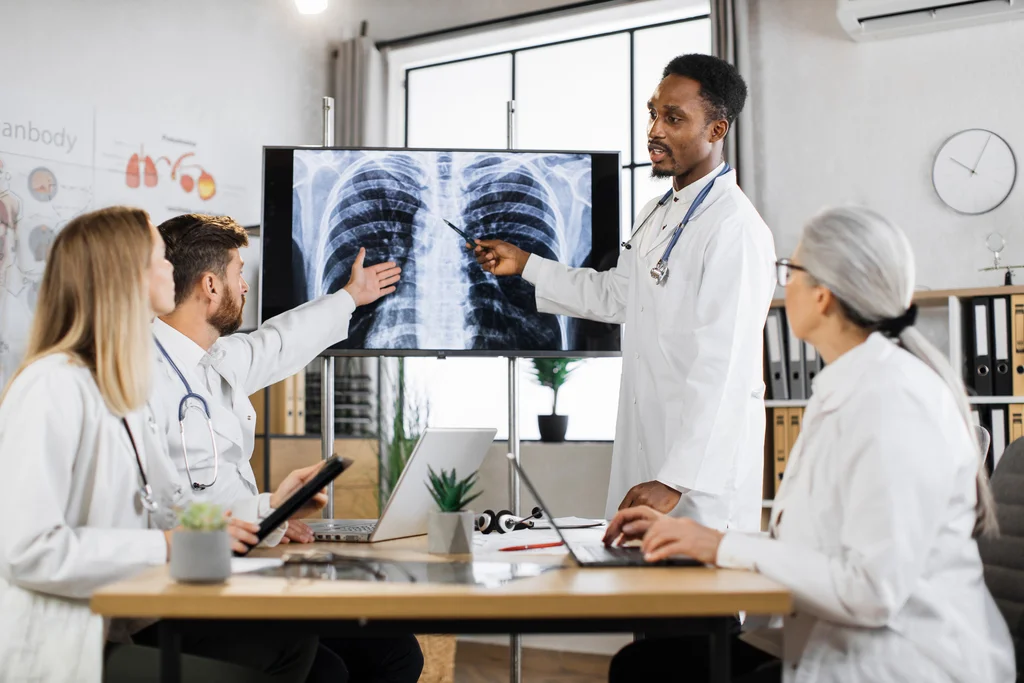
Pulmonologists are doctors who specialize in treating conditions that affect the lungs and breathing. They work with patients who have asthma, chronic obstructive pulmonary disease (COPD), lung infections, sleep disorders, and even lung cancer. Their work goes far beyond writing prescriptions. It involves reading complex test results, making fast decisions in critical situations, and explaining difficult diagnoses to patients who are often scared or confused.
Understanding pulmonologist skills matters because lung disease is one of the leading causes of death and disability in the United States. According to the American Lung Association, more than 37 million Americans live with a chronic lung disease. When a pulmonologist is well-trained and skilled, patients get better care, faster diagnoses, and more effective treatment plans.
In this article, you will learn about the core clinical skills in pulmonology, how pulmonologists handle patient care, and what it truly takes to succeed in this specialty. Whether you are a patient, a student, or a healthcare professional, this breakdown will help you understand what separates a good pulmonologist from a great one.

What Clinical Skills Does a Pulmonologist Need to Possess?
The most important foundation for any pulmonologist is strong clinical knowledge. This includes understanding how the lungs work, how diseases develop, and how to accurately test for them.
A pulmonologist must be skilled in performing and interpreting pulmonary function tests (PFTs). These tests measure how much air the lungs can hold and how quickly air moves in and out. Results from PFTs help diagnose conditions like asthma, COPD, and pulmonary fibrosis. Misreading the results can lead to wrong treatments, so accuracy here is critical.
Bronchoscopy is another key clinical skill. This is a procedure in which a thin, flexible tube with a camera is guided into the airways to detect problems. Pulmonologists use bronchoscopy to find tumors, collect tissue samples, and remove blockages. It requires a steady hand, spatial awareness, and years of practice.
Reading chest imaging is also essential. Pulmonologists regularly analyze chest X-rays and CT scans to detect abnormalities such as fluid buildup, collapsed lungs, or masses. A trained eye can catch subtle changes that others might miss. These clinical skills are also among the top medical skills that healthcare employers look for when reviewing a specialist’s qualifications.
How Do Pulmonologists Handle Critical Care?
Many pulmonologists also work in intensive care units (ICUs), where they manage patients on mechanical ventilators or those experiencing respiratory failure. This is where the skills needed to become a pulmonologist overlap heavily with critical care medicine.
In the ICU, a pulmonologist must manage mechanical ventilation settings based on each patient’s needs. Too much pressure can damage the lungs. Too little can leave the patient without enough oxygen. These adjustments require fast, data-driven thinking.
They also perform procedures such as placing chest tubes to drain fluid or air from around the lungs. During emergencies like acute respiratory distress syndrome (ARDS), their decisions can mean the difference between survival and death.
The American Thoracic Society notes that critical care training is now considered a core part of pulmonology fellowships in the United States, underscoring the close link between the two fields.
What Patient Care Skills Are Essential in Pulmonology?
Pulmonologist patient care skills go well beyond the technical side of medicine. How a doctor communicates with a patient directly affects how well that patient follows their treatment plan.
Many patients with lung disease deal with chronic illness for many years. A good pulmonologist knows how to explain a complex condition like pulmonary hypertension in plain, simple terms. They also know how to have difficult conversations, such as when a patient is diagnosed with lung cancer or when treatment options are limited.
Active listening is just as important as speaking clearly. Patients often share clues during casual conversation that point to a missed diagnosis. A pulmonologist who listens carefully catches these details.
Cultural competence also plays a role in patient care, especially in a diverse country like the United States. Patients from different backgrounds may describe symptoms differently or have varying comfort levels with certain procedures. Being aware of this helps build trust and leads to better outcomes. This is why cultural awareness is now recognized as one of the core healthcare skills that all medical professionals should carry into their practice.
What Skills Are Needed to Become a Pulmonologist?
The path to becoming a pulmonologist in the U.S. is long and demanding. After completing medical school and a general internal medicine residency, doctors must complete a fellowship in pulmonology, which is usually two to three years. During this time, they build both clinical and procedural skills. A well-prepared medical school resume is often the first step in getting into a competitive program, as it sets the tone for how a candidate’s strengths and experiences are presented to admissions committees.
Strong analytical thinking is one of the skills needed to become a pulmonologist, but it is often overlooked. Lung diseases can look similar on the surface, and narrowing down the right diagnosis requires careful reasoning. For example, shortness of breath can be caused by heart failure, a lung clot, severe asthma, or anxiety. A skilled pulmonologist systematically considers each possibility.
Research and evidence-based thinking are also part of the job. Medicine changes quickly, and pulmonologists must stay current with new studies, updated treatment guidelines, and emerging therapies. Those who work in academic medical centers may also conduct their own research.
Time management is another practical skill. Hospital rounds, outpatient clinics, procedures, and emergency calls all compete for a pulmonologist’s time. Being organized and efficient without cutting corners on care is a daily challenge.
How Do Pulmonologists Work With Other Medical Teams?
Pulmonologists rarely work alone. They collaborate regularly with cardiologists, oncologists, radiologists, and primary care doctors. This team-based approach is especially important for patients with overlapping conditions, such as a lung cancer patient who also has heart disease.
Good communication within the care team is critical. A pulmonologist must write clear notes, give concise verbal updates, and be available when other doctors have questions. In large hospital systems, this kind of coordination directly affects how quickly a patient receives the right care.
They also work closely with respiratory therapists, nurses, and pharmacists. In an ICU, respiratory therapists manage ventilator settings hour to hour, but they rely on the pulmonologist’s guidance and clinical orders. A strong working relationship between these roles keeps patients safer. The ability to collaborate across specialties is also one of the key skills for a doctor’s resume that hiring managers in U.S. healthcare systems consistently look for.
Why Ongoing Learning Matters in Pulmonology
Medicine does not stand still, and neither can a pulmonologist. Over the past decade, there have been major advances in treatments for diseases like idiopathic pulmonary fibrosis and cystic fibrosis. New medications, biologics for severe asthma, and improved lung transplant techniques continue to reshape how pulmonologists practice.
Staying current through continuing medical education (CME), attending conferences like the American Thoracic Society’s annual international conference, and reading peer-reviewed journals are all part of being a competent pulmonologist. Those who stop learning quickly fall behind. Setting clear goals for professional growth in healthcare helps pulmonologists stay focused on where they want to take their careers and what skills they still need to build further.
Adaptability is part of this, too. During the COVID-19 pandemic, pulmonologists were on the front lines managing thousands of critically ill patients with a disease that had no established treatment protocols at the start. Their ability to adapt, share information quickly, and apply lessons from other respiratory illnesses was vital.
Pulmonology Career Opportunities Start With a Strong Resume
The best pulmonologists combine technical precision with genuine human connection. They are skilled proceduralists, sharp diagnosticians, and clear communicators, all at once. Whether managing a patient in the ICU or explaining a new inhaler technique in a clinic visit, every interaction calls for a different set of skills working together.
For patients seeking care, understanding these skills helps you ask better questions and find the right specialist for your needs.
For those training in the field, knowing what it takes gives you a clearer path forward. If you are a pulmonologist looking to present your expertise to the right employers, a well-crafted physician CV can help communicate everything you bring to the table in a clear and compelling way.